

Exosome Therapy vs Stem Cell Therapy: What's the Real Difference?
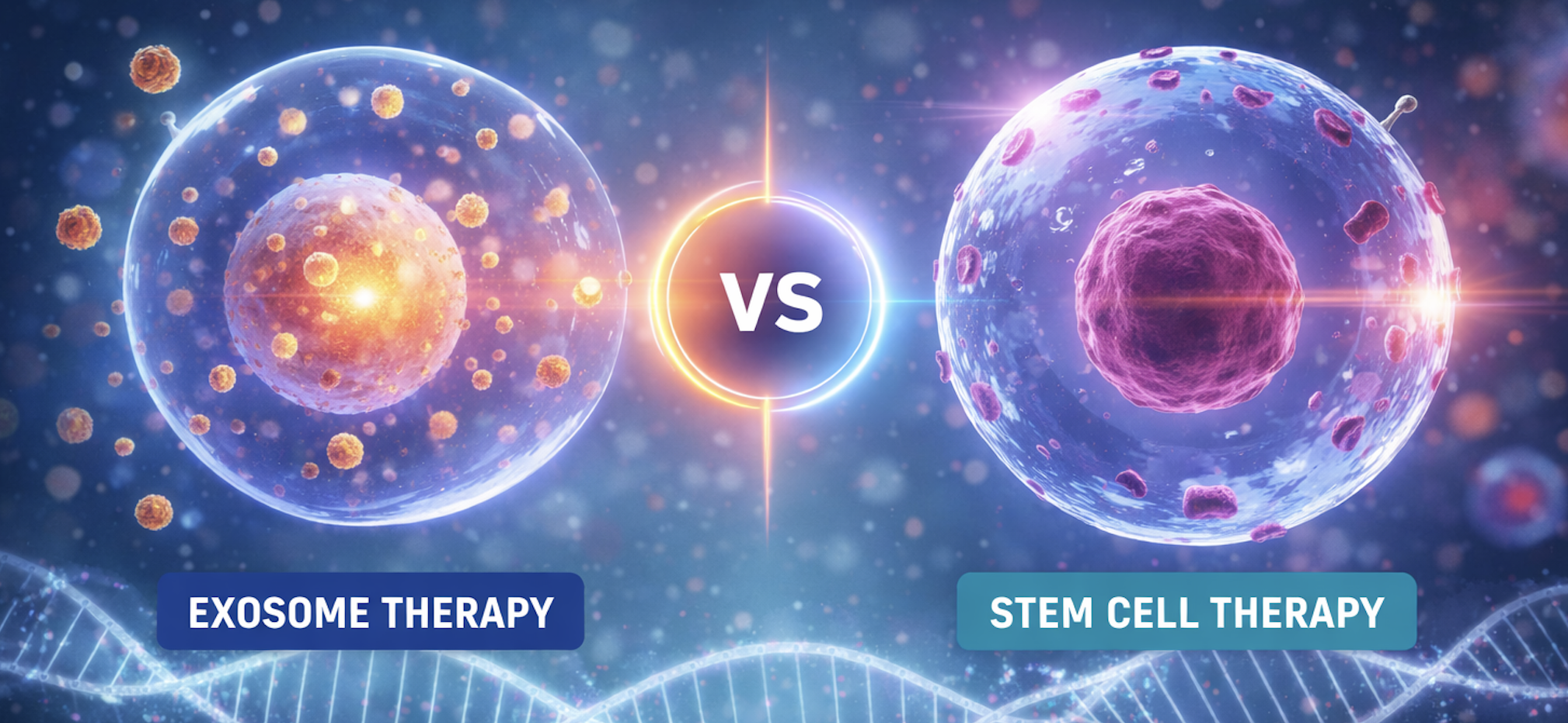
Exosome therapy and stem cell therapy are often mentioned together in regenerative medicine, yet many patients assume they're essentially the same treatment. Although this may be true that both aim to promote healing and tissue repair, their mechanisms, composition, and clinical applications differ significantly. Understanding these distinctions is critical when considering which therapeutic approach aligns best with your specific health condition and treatment goals. This guide breaks down what each therapy involves, how they work at the cellular level, their respective advantages and limitations, and the key factors that should influence your treatment decision.
What Are Stem Cells and How Does Stem Cell Therapy Work?
Stem cells are unique biological units that possess two defining characteristics: they can self-renew by creating copies of themselves, and they can differentiate into specialized cell types throughout the body 1. These properties make them fundamental to tissue maintenance and repair after injury. Stem cell therapy harnesses this regenerative potential to promote the repair response of diseased, dysfunctional, or injured tissue 1.
Types of Stem Cells Used in Therapy
Embryonic stem cells come from embryos that are 3 to 5 days old and are pluripotent, meaning they can divide into more stem cells or become any type of cell in the body 1. At this stage, an embryo contains approximately 150 cells 1. However, embryonic stem cells exist only briefly during early development before tissues begin to form 2.
Adult stem cells, also called tissue-specific or somatic stem cells, are found in small numbers in most adult tissues such as bone marrow or fat 1. Compared with embryonic stem cells, adult stem cells have a more limited ability to give rise to various cells of the body 1. Hematopoietic stem cells reside in the bone marrow and can produce all the cells that function in the blood 1.
Mesenchymal stem cells (MSCs) represent the most widely studied and used stem cells in regenerative medicine 1. These multipotent cells originate from the early mesoderm and can be isolated from adult bone marrow, dental pulp, adipose tissue, umbilical cord, and other tissues 1. MSCs have many advantages such as easy isolation, high in vitro expansion, low immunogenicity, and targeted differentiation into neural tissue cells 1.
Induced pluripotent stem cells (iPSCs) are created by transforming regular adult cells into stem cells using genetic reprogramming 1. By altering the genes in adult cells, researchers can make the cells act similarly to embryonic stem cells 1. This technique may allow use of reprogrammed cells instead of embryonic stem cells and prevent immune system rejection 1.
Perinatal stem cells have been discovered in amniotic fluid as well as umbilical cord blood, and these stem cells can change into specialized cells 1.
How Stem Cells Are Harvested and Administered
For bone marrow-derived stem cells, a specialized needle extracts bone marrow from the iliac crest, the upper part of the pelvis 1. This bone marrow aspiration process is minimally invasive and performed under local anesthesia 1. Adipose-derived MSCs are obtained through a minor liposuction procedure 1.
Blood stem cells are taken through a painless process called apheresis, where blood is taken from a vein and circulated through a machine that removes the stem cells and returns remaining blood and plasma back to the patient 3. Bone marrow stem cells are harvested in an operating room through a needle placed in the soft center of the bone 3.
Once collected, stem cells are concentrated and purified using advanced laboratory techniques 1. The bone marrow sample is spun in a centrifuge to separate and isolate stem cells 1. Researchers grow stem cells in a lab and manipulate them to specialize into specific types of cells, such as heart muscle cells, blood cells, or nerve cells 1.
Using advanced imaging guidance, doctors inject stem cells precisely into the affected area, which could be the knee joint, hip joint, shoulder, or spine 1. The injection process is minimally invasive and performed under local anesthesia 1. Doctors use ultrasound or fluoroscopy to guide the needle to the exact site 1.
The Regenerative Mechanism of Stem Cells
Stem cells can migrate to the site of injury and have the ability to differentiate into local components of the injury site, helping regenerate the tissue 1. During the entire repair process, recruited stem cells produce paracrine factors that exhibit antiapoptotic, proangiogenic, and accelerated cell proliferation effects 1.
Exogenous MSCs implanted in injured areas can produce cytokines such as fibroblast growth factor (FGF)-2, hepatocyte growth factor (HGF), vascular endothelial growth factor (VEGF), and transforming growth factor (TGF)-β through paracrine effects 1. These cytokines promote angiogenesis as well as fibroblast migration and proliferation, accelerate the deposition of collagen, regulate the inflammatory response in damaged tissues, and promote tissue regeneration 1.
What Are Exosomes and How Does Exosome Therapy Work?
Exosomes are nano-sized extracellular vesicles ranging from 30 to 150 nm in diameter that cells release into their surrounding environment 111. Unlike stem cells, which are living entities capable of self-renewal, exosomes are membrane-bound packages secreted by cells as part of normal physiological processes. These tiny vesicles carry biological information from their parent cells to recipient cells, functioning as cellular messengers rather than regenerative units themselves.
The Origin and Function of Exosomes
The biogenesis of exosomes follows a specific pathway within the endosomal system. The process begins when the cell membrane invaginates inward to form early endosomes 1. These early endosomes accumulate bioactive substances and then undergo a second indentation to become late sorting endosomes, which eventually form multivesicular bodies (MVBs) 41. When MVBs fuse with the cell membrane, they release their internal vesicles into the extracellular space as exosomes 11.
Almost all cell types produce exosomes, including mesenchymal stem cells, immune cells such as T cells and B cells, macrophages, dendritic cells, and natural killer cells 4. Correspondingly, exosomes can be found in all biological fluids such as blood, plasma, urine, cerebrospinal fluid, saliva, amniotic fluid, and breast milk 11.
The cargo within exosomes mirrors the physiological state of their parent cells. These vesicles contain proteins (including tetraspanins, heat shock proteins, and cytokines), lipids, messenger RNA, microRNA, long noncoding RNA, growth factors, and metabolites 111. This diverse molecular content enables exosomes to influence recipient cell behavior and function.
How Exosomes Are Extracted and Delivered
Exosome extraction predominantly relies on ultracentrifugation, which 64% of research studies employ 1. This technique uses centrifugal forces ranging from 100,000 to 120,000 ×g to separate exosomes from other sample components based on density and size differences 4. Additionally, 18% of studies use exosome isolation kits, while 7% combine ultracentrifugation with filtration methods 1.
Once isolated, exosomes undergo characterization using transmission electron microscopy, nanoparticle tracking analysis, and western blotting to verify their size, morphology, and cargo profile 11. Most studies apply a combination of these methods to confirm successful exosome isolation.
Exosome therapy delivers these vesicles through subcutaneous injection or topical application to injured or diseased tissues 1. Studies report averaging 83.76 ± 126.4 μg of exosomes per cm² of treated tissue 1.
The Communication Role of Exosomes in Healing
Exosomes facilitate intercellular communication through three distinct mechanisms. First, recipient cells internalize exosomes via receptor-mediated endocytosis, releasing messenger substances into the cytoplasm 1. Second, exosomes fuse directly with the plasma membrane of target cells 1. Third, ligands on exosome surfaces bind to receptors on target cell membranes 11.
The low immunogenicity of exosomes facilitates repeated administration without triggering immune rejection, addressing a major barrier in cell therapies 1. Their small size allows them to cross biological barriers, including the blood-brain barrier, and avoid phagocytosis by immune cells 41. Surface proteins CD55 and CD59 prevent activation of immune responses, enabling stable distribution throughout biological fluids 4.
Exosomes demonstrate anti-inflammatory, proangiogenic, and immunoregulatory activities 1. They deliver growth factors and cytokines that promote angiogenesis, regulate matrix metalloproteinases for tissue remodeling, and stimulate collagen synthesis at wound sites 1.
Key Differences Between Exosome Therapy and Stem Cell Therapy
The fundamental distinction between these two therapies lies in their basic composition and mechanism of action. Stem cells are living, undifferentiated cells that can self-renew and transform into specialized cell types such as muscle, nerve, or blood cells 1. They directly replace or repair damaged tissues by physically integrating into the treatment area. Exosomes, in contrast, are not cells at all but tiny vesicles released by cells, including stem cells 1. These membrane-bound structures act as intercellular messengers, transferring molecular cargo like proteins and genetic material to influence recipient cell behavior 1.
Living Cells vs Cellular Messengers
Stem cells function as the body's raw materials, capable of developing into many cell types and directly regenerating tissues 1. When administered, they can differentiate into new tissue, physically replacing damaged cells 5. Exosomes operate differently. They do not become new tissue themselves but deliver targeted biological instructions that prompt existing cells to repair and regenerate 5. This cell-free approach means exosomes transfer bioactive molecules without introducing living cellular material into the body.
Self-Replication Capabilities
Stem cells possess the ability to proliferate and divide, creating new cells over time 11. This self-renewal capacity enables continued tissue regeneration long after administration. However, this same property carries potential risks. In rare cases, stem cells may exhibit uncontrolled growth, leading to tumor formation 15. Exosomes cannot replicate and carry no risk of becoming malignant 11. Because they are not cells, they eliminate concerns about unwanted cell division or oncological complications.
Size and Delivery Methods
Exosomes measure approximately 30 to 150 nanometers in diameter, making them roughly 100 times smaller than stem cells 1. Stem cells average around 13,000 nm 1. This size difference affects delivery and distribution. The large diameter of stem cells may lead to accumulation in the lung after intravenous injection, potentially causing infusion toxicity 1. Exosomes' small size allows sterilization by filtration 1 and enables them to cross biological barriers, including the blood-brain barrier 6. They can be administered through intravenous therapy, direct injection, inhalation, or topical application 61.
Safety Profile and Risk Factors
Stem cell therapy involves introducing living cells that carry DNA and surface antigens, which may trigger immune rejection when allogeneic cells are used 15. Exosomes contain no DNA from other organisms 7 and demonstrate minimal risk of immune response 1. They are acellular and non-immunogenic 8, allowing repeated administration without triggering rejection. Storage requirements also differ. Stem cells face harsh storage and transportation conditions 1, whereas exosomes remain stable for long-term storage 18.
Comparing Clinical Benefits and Limitations
Both treatment modalities address overlapping medical conditions but through distinct pathways. Stem cell therapies are being explored for hematological disease, immune disease, neurodegenerative disease, and tissue injuries 1. Exosome therapy shows potential for conditions like osteoarthritis, chronic pain, and musculoskeletal injuries 9. Clinical investigations demonstrate both approaches benefit patients with arthritis, tendonitis, meniscus tears, tendon and ligament injuries, rotator cuff tears, herniated disks, and degenerative disk disease 10.
Conditions Both Therapies Can Treat
Currently, thousands of stem cell therapy-related clinical trials have been registered with the US National Institutes of Health, with 7,018 studies examining stem cell applications compared to 158 studies investigating exosome therapy 1. Osteoarthritis represents a significant target condition, affecting approximately 240 million patients globally 11. MSC-derived exosomes have demonstrated benefits in 72% of studies evaluating their preclinical use 12. For fracture healing, exosome therapy utilizes bone marrow-derived MSCs, with recipient cells like osteoblasts and vascular endothelial cells absorbing the vesicles to activate various signaling pathways 11.
Advantages of Stem Cell Therapy
Stem cells offer multilineage differentiation potential and extensive pre-clinical and clinical study results 1. The only FDA-approved stem cell therapy is haematopoietic progenitor cell transplantation for haematopoietic and immunological reconstitution in patients with disorders affecting the haematopoietic system 1. Additionally, several products have gained approval: Prochymal in Canada for acute graft-versus-host disease treatment, and Holoclar in Europe for corneal repair 1. Stem cells demonstrate strong paracrine effects, releasing growth factors and cytokines that support structural regeneration beyond surface-level improvement 8.
Advantages of Exosome Therapy
Compared to stem cells, stem cell-derived exosomes possess numerous advantages, including non-immunogenicity, non-infusion toxicity, easy access, effortless preservation, and freedom from tumorigenic potential and ethical issues 11. Their small size allows sterilization by filtration 1. Exosomes remain stable for long-term storage and transportation 1, and their hydrophilic lumen and phospholipid bilayer can be engineered and modified for drug loading 1. In 2020, the first clinical trial of an engineered exosome therapy (exoSTING) launched for treating multiple solid tumors 1.
Potential Drawbacks and Challenges
One major obstacle preventing exosome-based therapeutics from entering clinical practice is the low yield and efficiency of exosomes 11. Exosomes are heterogeneous in terms of size, content, surface markers, and source, which makes their isolation difficult 11. Prior to clinical applications, exosomes must be prepared and optimized in terms of production, purification, and modification 11. For stem cell therapy, allogeneic stem cells carry antigens that may elicit an immune response 1, and stem cell injection may result in oncological complications, including hematological and non-hematological malignancies 1.
Which Therapy Is Right for Your Condition?
Selecting between these approaches depends on treatment goals, patient expectations, and the clinical setting 8. Healthcare providers evaluate patient history, severity of tissue damage, and desired treatment outcomes before recommending either therapy 13.
Factors That Influence Treatment Choice
The decision hinges on whether direct cellular regeneration or enhanced cellular communication better serves the condition. Structural tissue damage severity, location of injury, and patient health profile all influence which approach proves most effective 13.
When Stem Cell Therapy May Be Preferred
Deep tissue replacement requires stem cell intervention 8. Orthopedic injuries such as cartilage damage or joint degeneration benefit from stem cells' ability to differentiate and physically replace damaged tissue 13. Severe injuries requiring joint repair or organ regeneration similarly call for stem cell transplantation 14.
When Exosome Therapy May Be Better
Exosome therapy suits esthetic skin concerns, hair restoration, and post-procedure healing 8. Patients seeking non-invasive solutions with consistent outcomes find exosomes preferable 8. Similarly, conditions where reducing inflammation and supporting cellular signaling are primary goals benefit from this approach 13.
Combining Both Therapies for Enhanced Results
Preclinical studies demonstrate promising outcomes when combining both therapies 7. This integrated approach provides tissue regeneration alongside reduced inflammation and enhanced recovery rates 14. Exosomes can accelerate healing immediately while stem cells replace damaged cells after expansion in culture 7.
Conclusion
Both exosome therapy and stem cell therapy offer distinct regenerative pathways, yet they address tissue repair through fundamentally different mechanisms. Stem cells physically replace damaged tissue through differentiation, whereas exosomes deliver biological signals that prompt existing cells to heal. Your choice between these therapies should ultimately depend on your specific condition, treatment goals, and the severity of tissue damage. As a matter of fact, consulting with a qualified healthcare provider helps determine which approach aligns best with your medical needs. Some patients may benefit from combining both therapies to maximize regenerative potential while addressing multiple healing aspects simultaneously. Research both options thoroughly before making your treatment decision.
References
[1] - https://pmc.ncbi.nlm.nih.gov/articles/PMC10092910/
[2] - https://www.cirm.ca.gov/stem-cell-key-terms/
[3] - https://www.uchicagomedicine.org/cancer/types-treatments/stem-cell-transplant/process
[4] - https://www.emjreviews.com/innovations/article/exosomes-a-brief-review-of-biology-and-medical-applications/
[5] - https://www.allurelasermedspa.com/exosomes-vs-stem-cell-treatment-which-is-better/
[6] - https://www.oregonmedicalcenters.com/blog/regenerative-medicine-buzz-stem-cells-vs-exosomes
[7] - https://pmc.ncbi.nlm.nih.gov/articles/PMC10298660/
[8] - https://www.empiremedicaltraining.com/blog/exomes-vs-stem-cells-which-deliver-better-results/
[9] - https://www.drtsbeck.com/post/exosome-therapy-versus-stem-cell-therapy-how-do-they-differ
[10] - https://www.spinepains.com/post/exosome-therapy-versus-stem-cell-therapy-how-do-they-differ
[11] - https://www.nature.com/articles/s41392-023-01704-0
[12] - https://www.americanpharmaceuticalreview.com/Featured-Articles/575432-Exosomes-The-Good-Bad-Ugly-and-Current-State/
[13] - https://thefountainwpb.com/exosome-vs-stem-cell/
[14] - https://ways2well.com/blog/stem-cells-or-exosomes-which-is-better-for-regenerative-therapy